
Commercial Hot Water Replacement in Melbourne: Can Your Facility Stay Open?
19 November 2026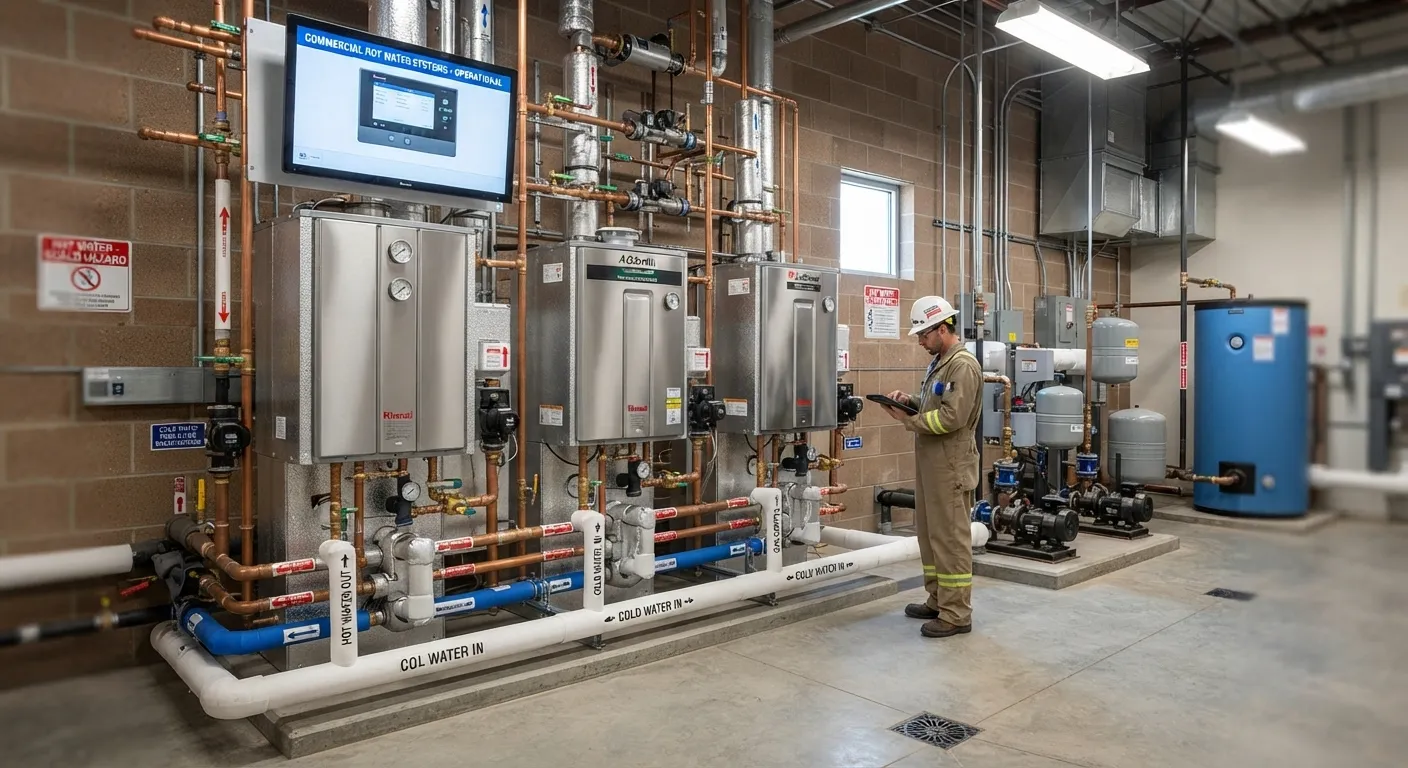
L&C Harding Plumbing explains commercial hot water replacement in Melbourne for facilities seeking to reduce downtime and meet key compliance requirements.
A failed or ageing central hot water plant can interrupt cleaning, staff amenities, showers and temperature-dependent processes. Commercial hot water replacement in Melbourne therefore requires suitable equipment and a controlled changeover. Careful preparation may allow all or part of a facility to remain open while required services, hygiene and safety controls are maintained.
Can Your Facility Stay Open During Hot Water Replacement?
Yes, some facilities can remain fully or partly open during a planned replacement, but this depends on how hot water supports their operations. An office may manage a defined outage if adequate amenities remain, while accommodation, gyms, hospitality venues and industrial sites may rely on continuous hot water for customers, cleaning or production. The answer also depends on system redundancy, separation between zones, plant access and the time needed for testing before outlets return to service.
The facility operator should identify functions that cannot continue without hot water and set an acceptable interruption window. If required amenities, hygiene measures or temperature-dependent activities cannot be maintained, the affected area or process may need to close until the system is commissioned. This decision belongs in the facility’s operational risk assessment and should be agreed with relevant managers before work begins.
Define Demand, Infrastructure and Site Constraints
A useful site assessment separates essential loads from services that can be reduced during the changeover. Our approach to commercial hot water replacement in Melbourne considers demand, existing infrastructure and operational constraints. Our guide to commercial hot water plant upgrades explains the main system options, but capacity, energy source and site requirements should be assessed together because replacement is not always a one-for-one equipment swap.
- Demand profile: Daily consumption, peak simultaneous use and operating hours.
- Plant capacity: Storage volume, recovery requirements and delivery temperatures.
- Existing system: Heaters, pumps, controls, recirculation loops and isolation points.
- Available services: Gas, electricity, water, drainage, ventilation and flue arrangements.
- Physical access: Plant-room dimensions, removal routes and lifting requirements.
- Operational risk: Vulnerable users, hygiene needs and processes requiring hot water.
- Replacement options: Heat pump, gas or solar pre-heat arrangements suited to the site.
Stage the Changeover and Verify Compliance
Disruption may be reduced by preparing new equipment before the existing plant is disconnected. Where the system design and remaining capacity allow, separate units or zones may be isolated in stages. An after-hours changeover may also reduce operational impact, although timing must allow for draining, connection work, testing, heat-up and commissioning.
Victorian plumbing work commenced on or after 20 October 2025 must comply with the 2025 edition of AS/NZS 3500, according to Building and Plumbing Commission guidance. Part 4 covers the design, installation and commissioning of heated water services, including alterations and repairs. We can assess the replacement alongside relevant commercial and industrial plumbing services so connections, isolations and related site requirements form part of a coordinated scope.
L&C Harding Plumbing for Commercial Hot Water Replacement in Melbourne
A controlled replacement starts with accurate system information, a realistic outage window and clearly defined commissioning requirements. At L&C Harding Plumbing, we assess, design, install and maintain commercial hot water plant upgrades for facilities across Melbourne. Early site review helps us prepare a practical quotation and identify the work needed to limit avoidable disruption.
Request a site assessment with your facility type, site address, existing system details, operating hours and preferred changeover period.

